AAA character production pipeline for modern Unreal Engine environments — built with cloth simulation, high-poly sculpting, UE Nanite, and AI-assisted workflows.
Full AAA Character Production Pipeline for Unreal Engine
AAA character models attract attention because modern games compete in their ability to create believable worlds, emotional tension, and deeply immersive visual experiences. Players increasingly expect cinematic-quality characters, true-to-life visual quality, convincing VFX behavior, and environmental atmosphere capable of emotional engagement throughout gameplay.
As a result, modern game-ready characters must balance visual fidelity with complex technical requirements related to facial and physics-based animation, draw-call management, physics asset configuration, and precise hitbox registration. This intersection of artistic direction and technical production makes AAA character development one of the most advanced areas of modern 3D pipelines.
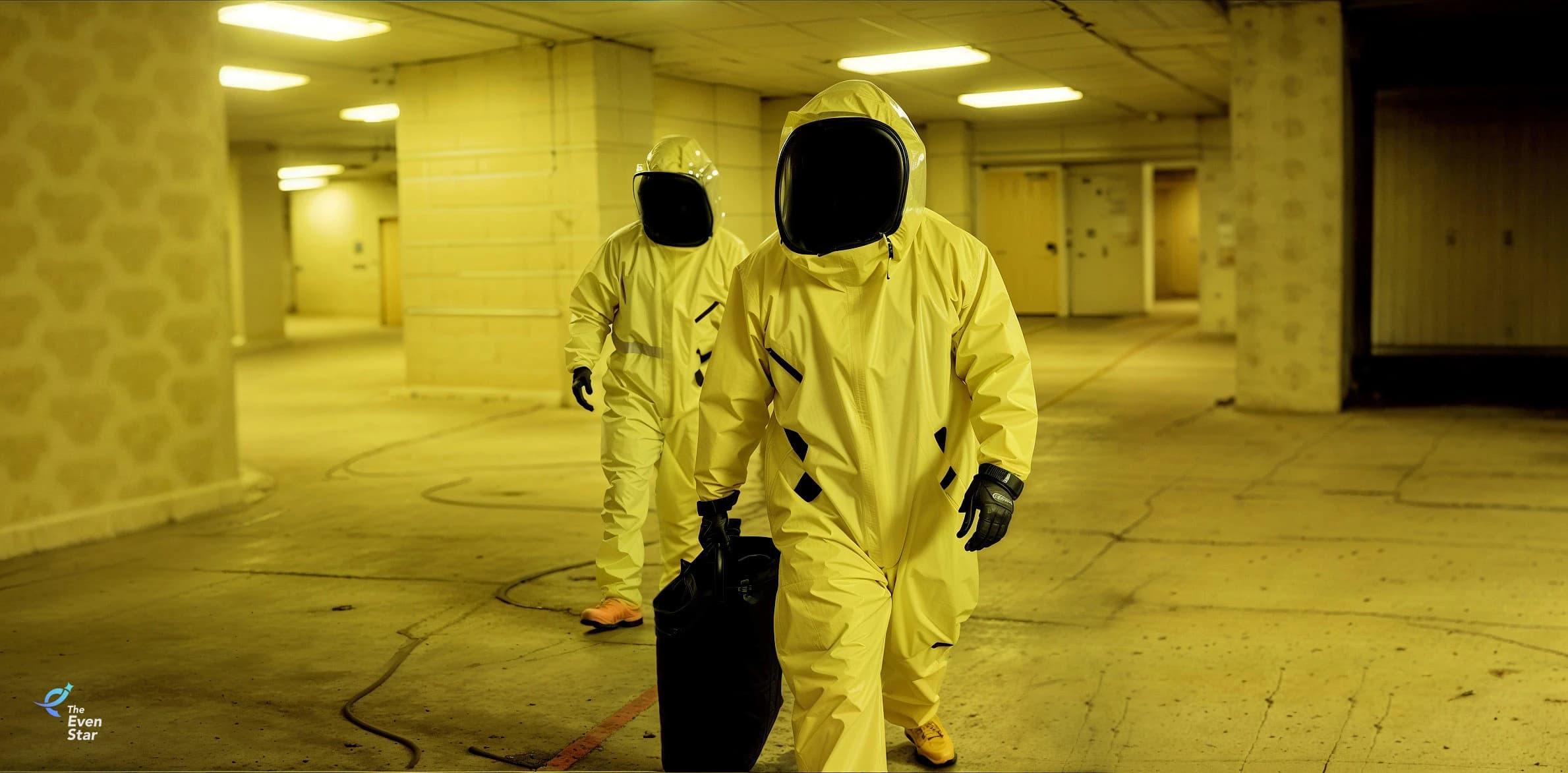
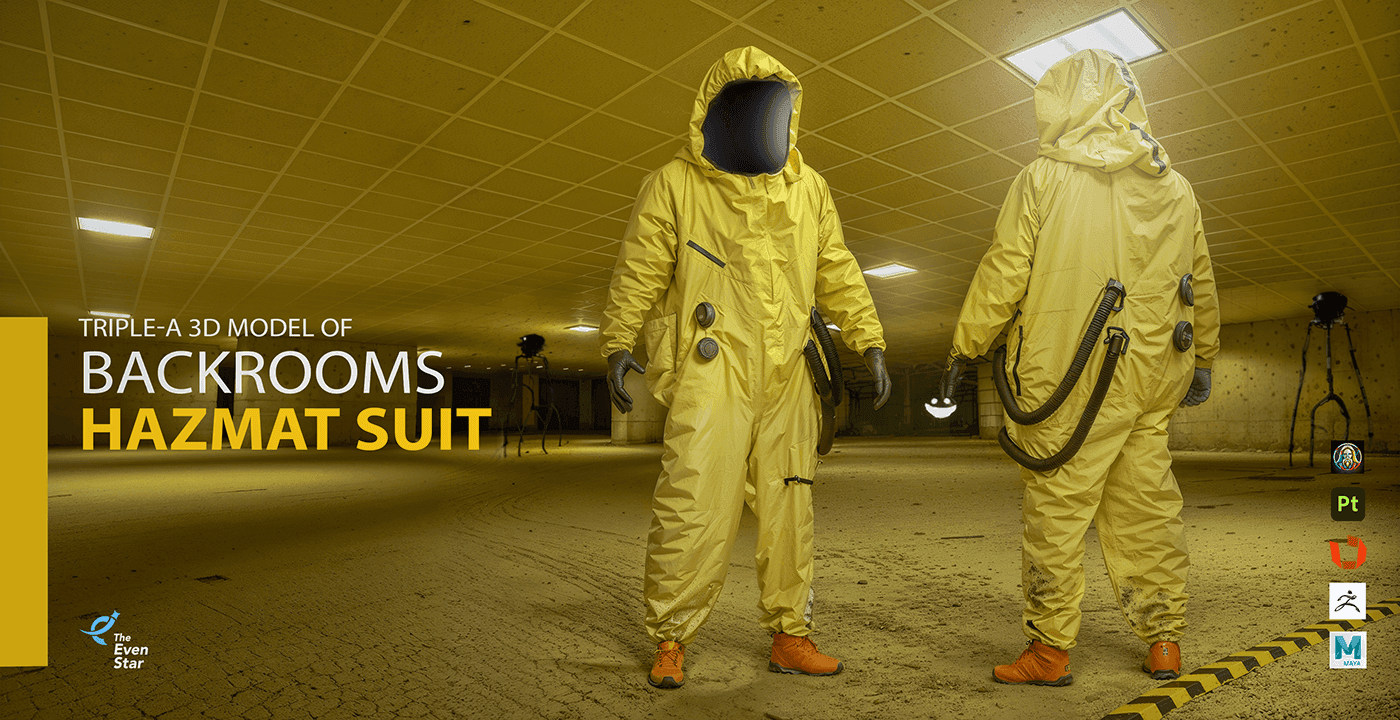
This case study explores the full AAA character production pipeline behind the development of a high-resolution HAZMAT character for Unreal Engine-based Backrooms environments. The project combines atmosphere-driven character design, cloth simulation, high-poly sculpting, optimization workflows, and AI-assisted production experimentation to create a production-ready asset for modern horror experience. Inside liminal spaces, its silhouette readability, material response, and integration with the environment contribute directly to tension, uncertainty, and player perception.
Project Overview
The project focused on redesigning the iconic HAZMAT suit into a high-resolution version specifically for the UE Nanite system, requiring complex geometry with numerous triangles, detailed surface fidelity, and realistic material response to support immersive horror-oriented gameplay environments.
Production spanned primary forms modeling, multilayer fabric simulation in Marvelous Designer, high-poly sculpting in ZBrush, material refinement, and final engine preparation. Particular attention was placed on realistic fold behavior, reflective visor interaction, and overall visual presence within liminal horror spaces.
Experimenting with Leonardo AI and Meshy AI 4 during concept visualization and texture generation stages served as part of exploring AI-assisted production workflows.
Horror Atmosphere and Character Presence
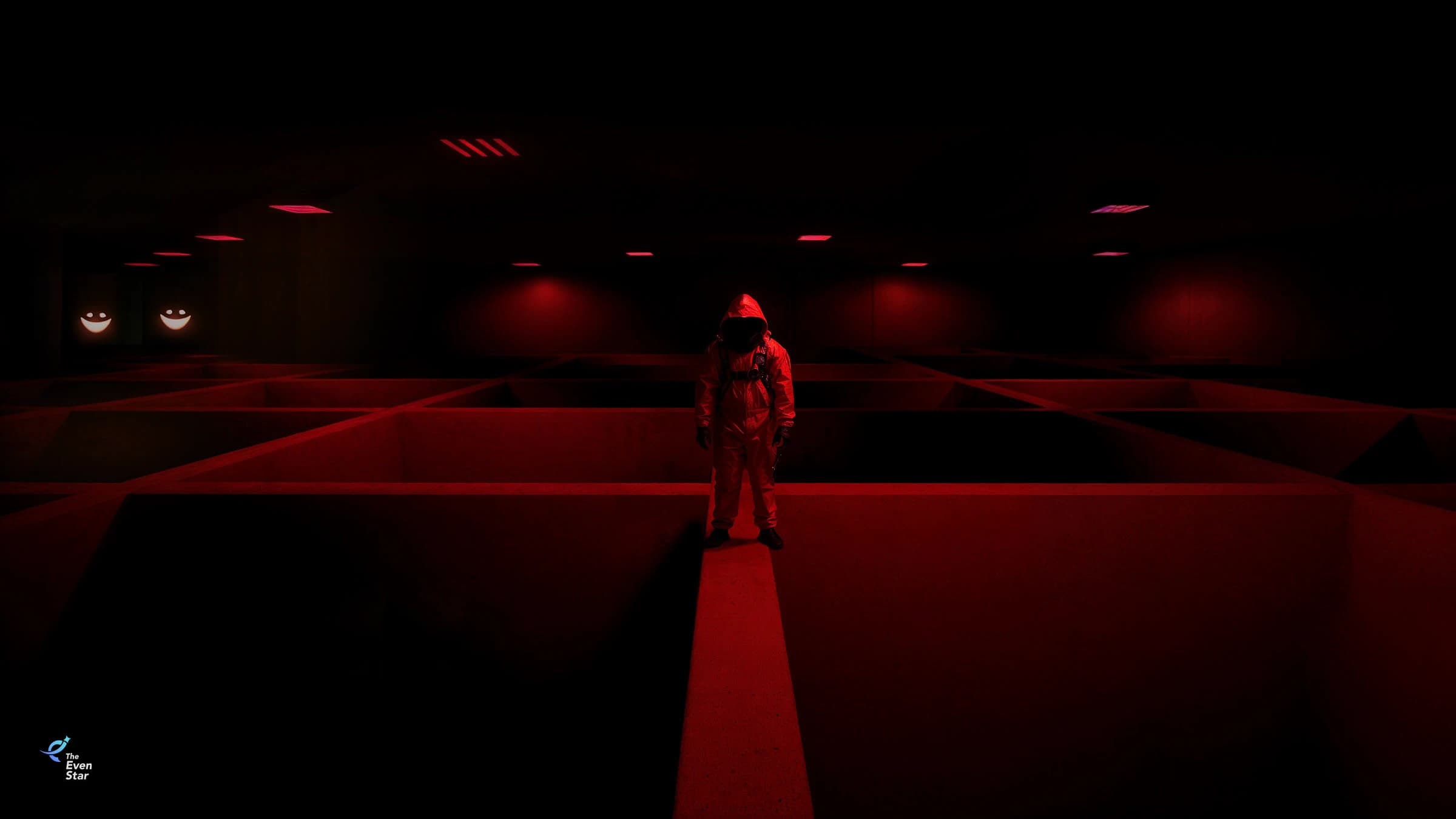
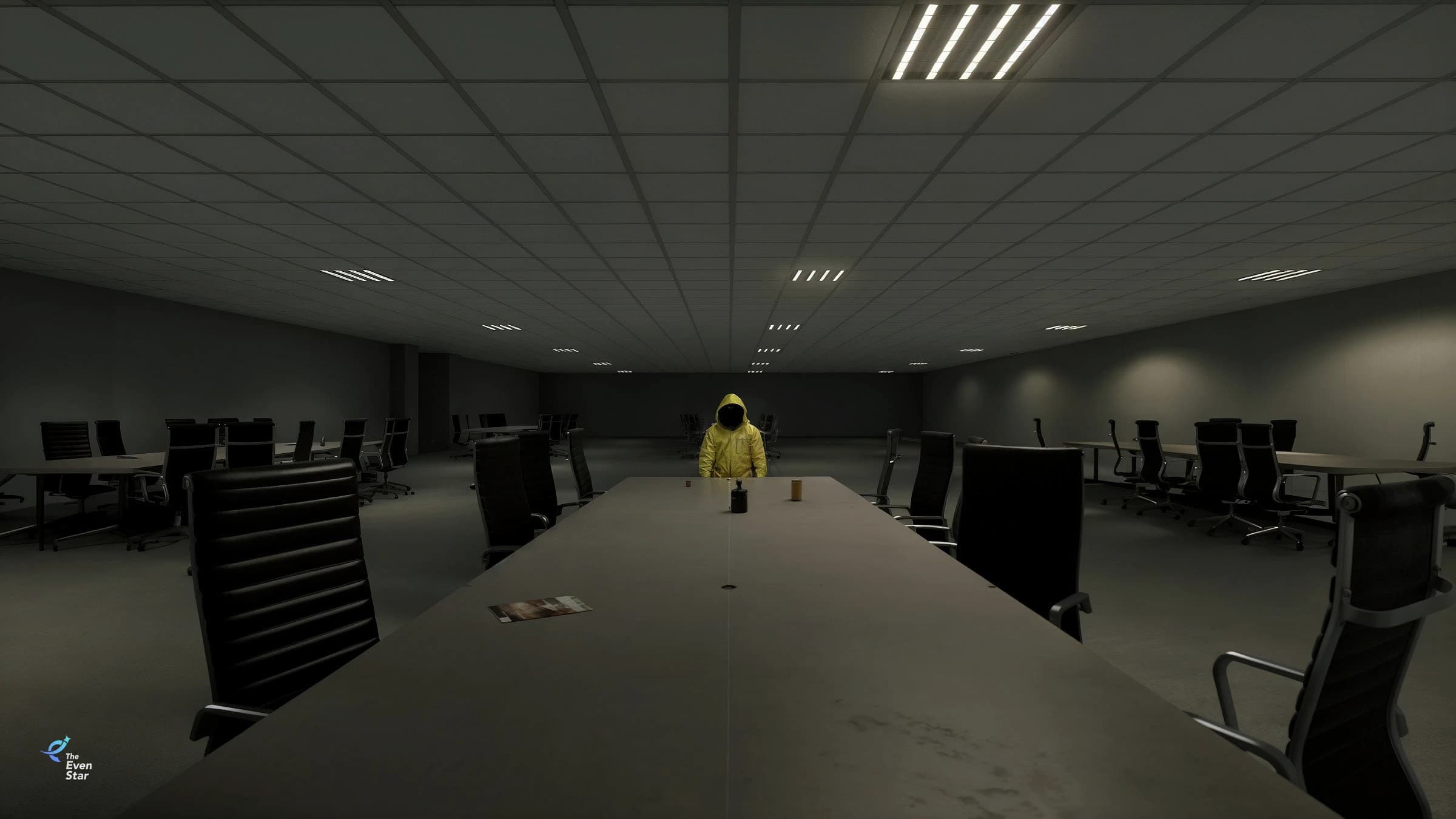
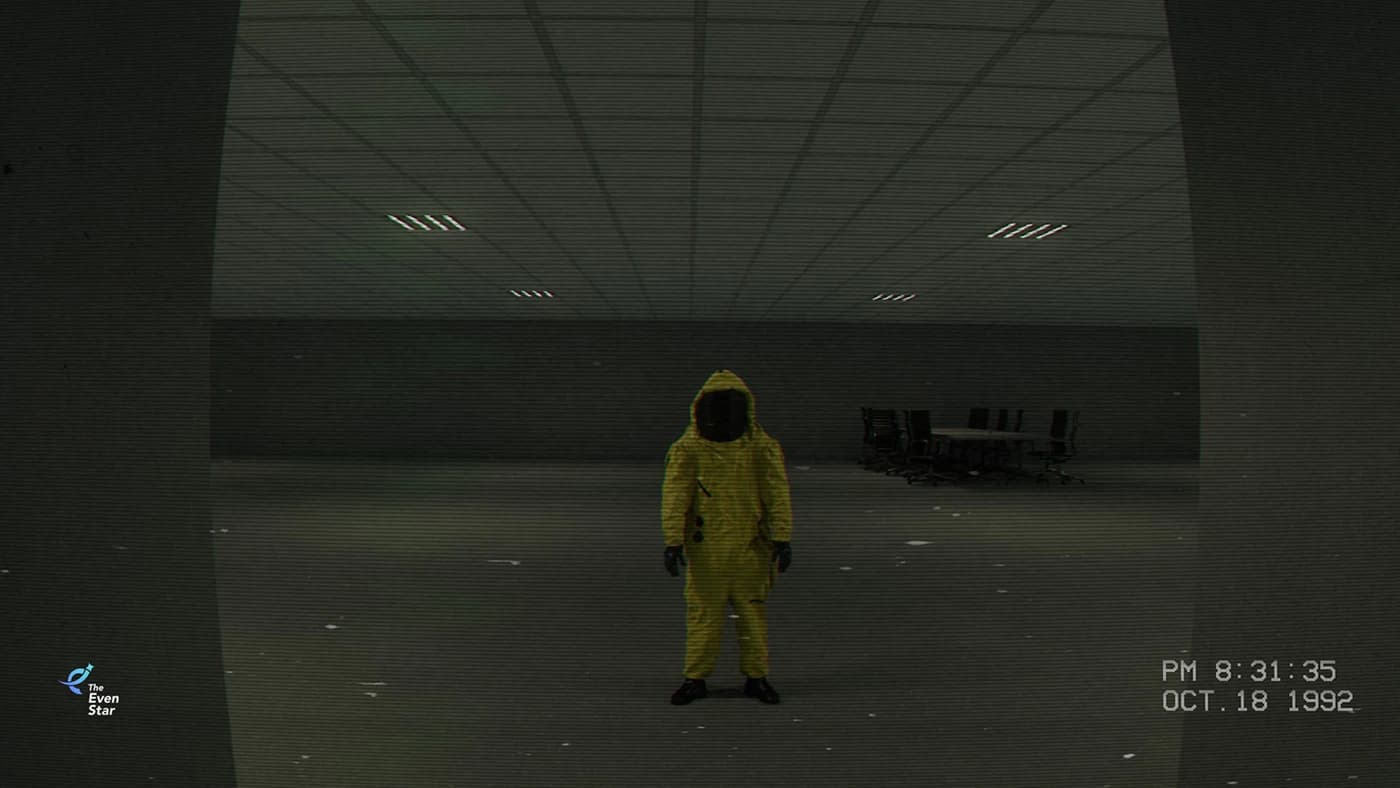
The visual direction of the HAZMAT suit was designed around anonymity, isolation, and uncertainty within Backrooms-inspired environments. The oversized protective silhouette, industrial design language, and fully obscured black visor contribute to an unsettling presence that blends into the liminal atmosphere of the environment while remaining visually distinct inside empty transitional spaces.
Particular attention was placed on the relationship between the character and the surrounding environment. The reflective black visor removes facial readability and emotional expression, making it difficult to determine identity, intention, or threat level. Combined with the empty liminal spaces associated with Backrooms aesthetics, the character creates tension through ambiguity, and environmental symbiosis rather than direct action or aggressive behavior.
Components such as the multilayer fabric structure, surface folds, and protective equipment elements were also developed to reinforce contamination-oriented horror aesthetics commonly associated with industrial and psychological horror environments.
1. Reference Collection and Visual Analysis
The production process began with collecting references related to industrial HAZMAT equipment, multilayer protective suits, visor structures, protective masks, and Backrooms-inspired environments. Additional reference analysis was used to study protective fabric layering, oversized fold behavior, surface complexity, and the overall structure of industrial protective clothing before beginning the modeling process.
2. Meshy AI 3D-Model Preview Generation
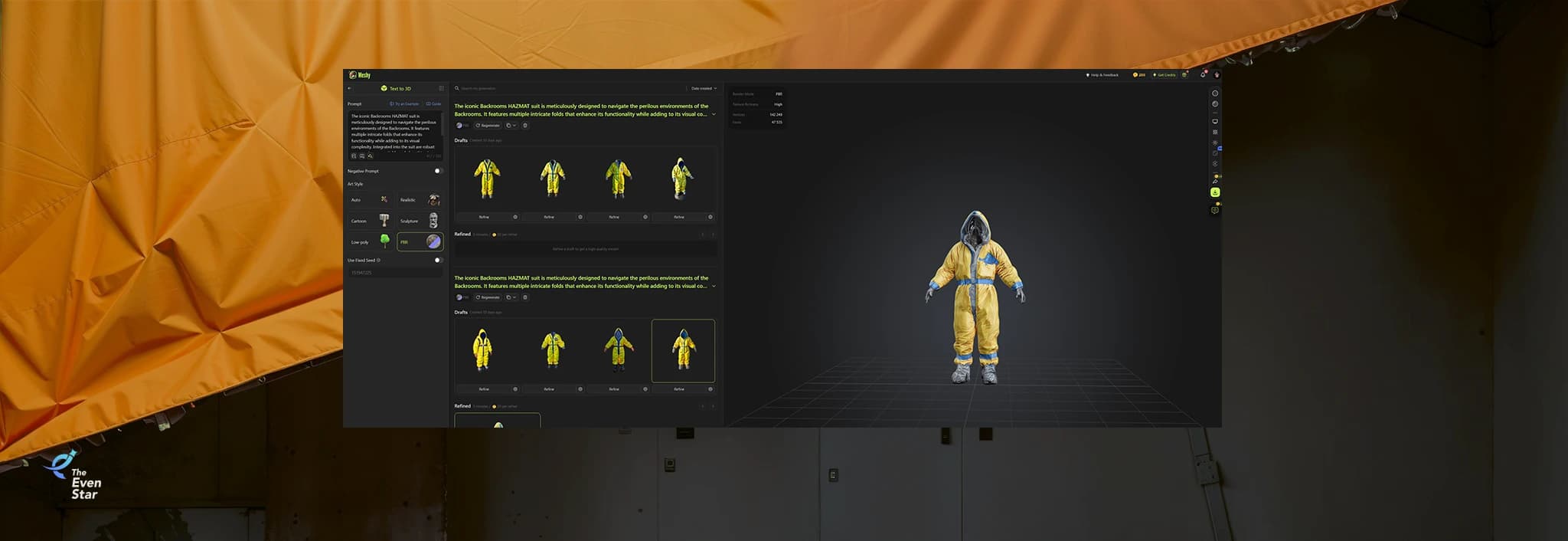
Meshy AI was tested during the early stages of development to generate preview versions of the HAZMAT model together with temporary environment screenshots. These generated previews were used to evaluate the appearance of the character inside Backrooms-inspired corridors and liminal spaces before starting the final production workflow.
3. Primary Forms Modeling
Base geometry and primary forms for the HAZMAT suit, visor structure, gloves, and connected protective equipment elements were developed to establish the overall structure of the final character before cloth simulation and detailing stages.
4. Cloth Simulation in Marvelous Designer
Base garment patterns for the HAZMAT suit were assembled in Marvelous Designer before running cloth simulations used to generate oversized protective folds across multilayer fabric surfaces. The suit structure included polyethylene or polypropylene barrier layers together with aluminum foil protective layers used to create thicker protective volumes and more complex fold behavior.
After completing the initial simulation stage, folds were manually refined using Marvelous Designer brush tools to improve fold direction, compression areas, fabric layering, and overall fold complexity across the protective suit.
5. High-Poly Sculpting in ZBrush
Sculpting stages were used to manually refine fold intersections, sharpen fabric transitions, increase surface density, and add secondary surface details required for the final high-resolution model.
An additional refinement pass was also applied across multilayer protective surfaces to improve overall surface complexity and enhance the visual appearance of the HAZMAT suit.
6. Leonardo AI Texture Generation and Model Enhancement
Leonardo AI was used to generate textures directly onto uploaded 3D models and identify areas requiring additional enhancement during the modeling process.
Generated texture variations were evaluated and used during later refinement phases to improve the visual appearance and surface detailing of the suit.
7. Final High-Resolution Model Development
Micro-surface detailing was added across the protective suit to increase surface intricacies and enhance visual fidelity for the final high-resolution HAZMAT model. Concluding refinement pass focused on preserving detailed folds, multilayer fabric complexity, and protective surface detailing across the character.
8. Unreal Engine and UE Nanite Preparation
Preparation of the production-ready HAZMAT asset for Unreal Engine and Nanite focused directly on preserving dense geometry, detailed fold structures, reflective visor surfaces, and high-resolution detailing during final in-engine integration.
9. In-Game Environment Presentation
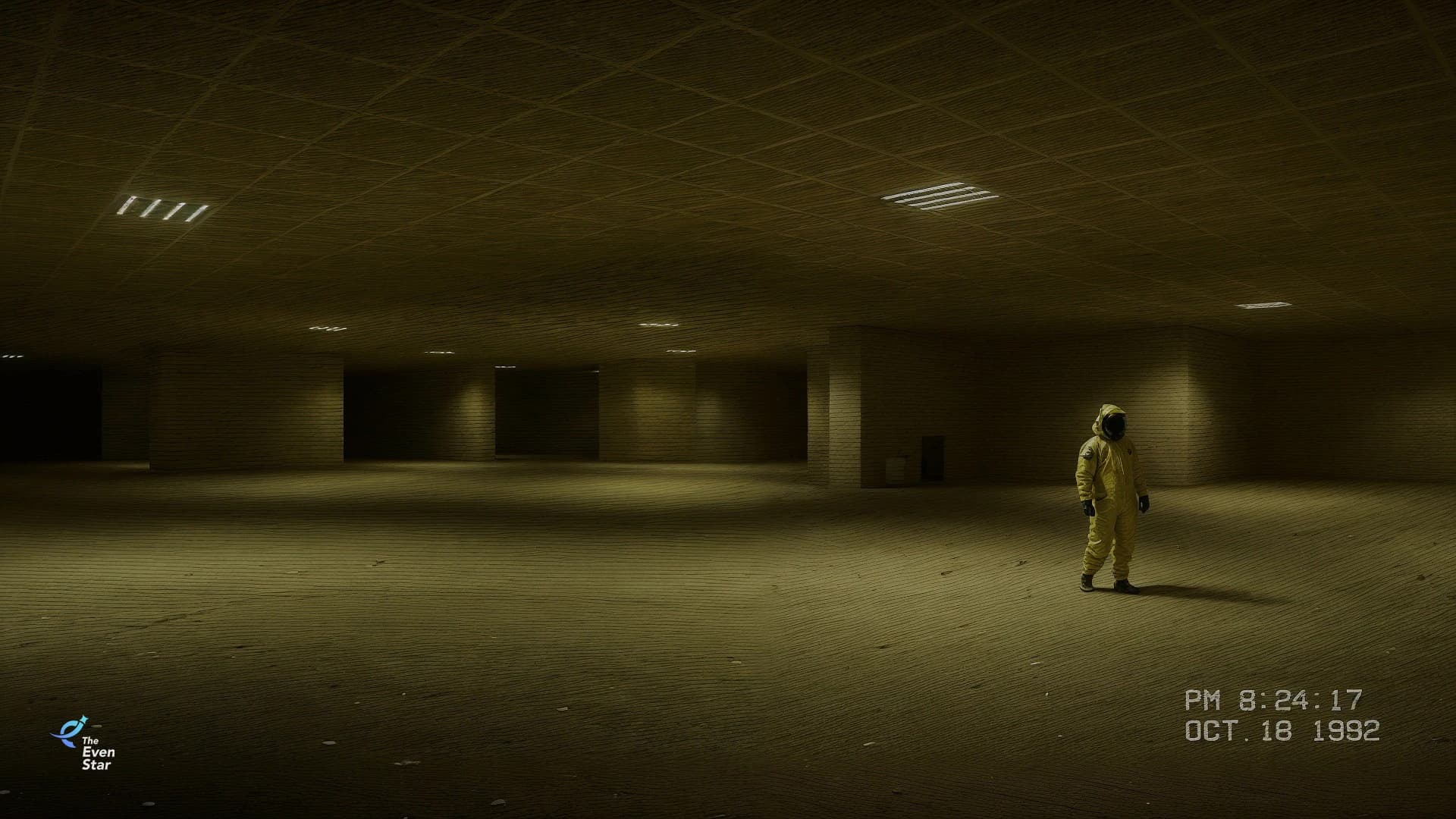
The finalized character was presented in Backrooms-inspired environments through in-game scenes and screenshots that show the HAZMAT suit across different corridors, environmental situations, and liminal spaces.
Technical Challenges and Production Constraints
The primary technical challenges during production involved creating believable multilayer protective fabrics while maintaining the oversized structure associated with industrial HAZMAT suits. Because the character relied heavily on thick protective volumes and complex fold behavior, cloth simulation stages required additional refinement to prevent unrealistic fabric deformation and overly chaotic fold distribution.
Another major challenge involved preserving detailed surface complexity across the final high-resolution model. The UE Nanite system supports dense geometry with numerous triangles, but maintaining consistent fold readability and surface detail across multilayer protective materials still required careful refinement during sculpting and detailing stages.
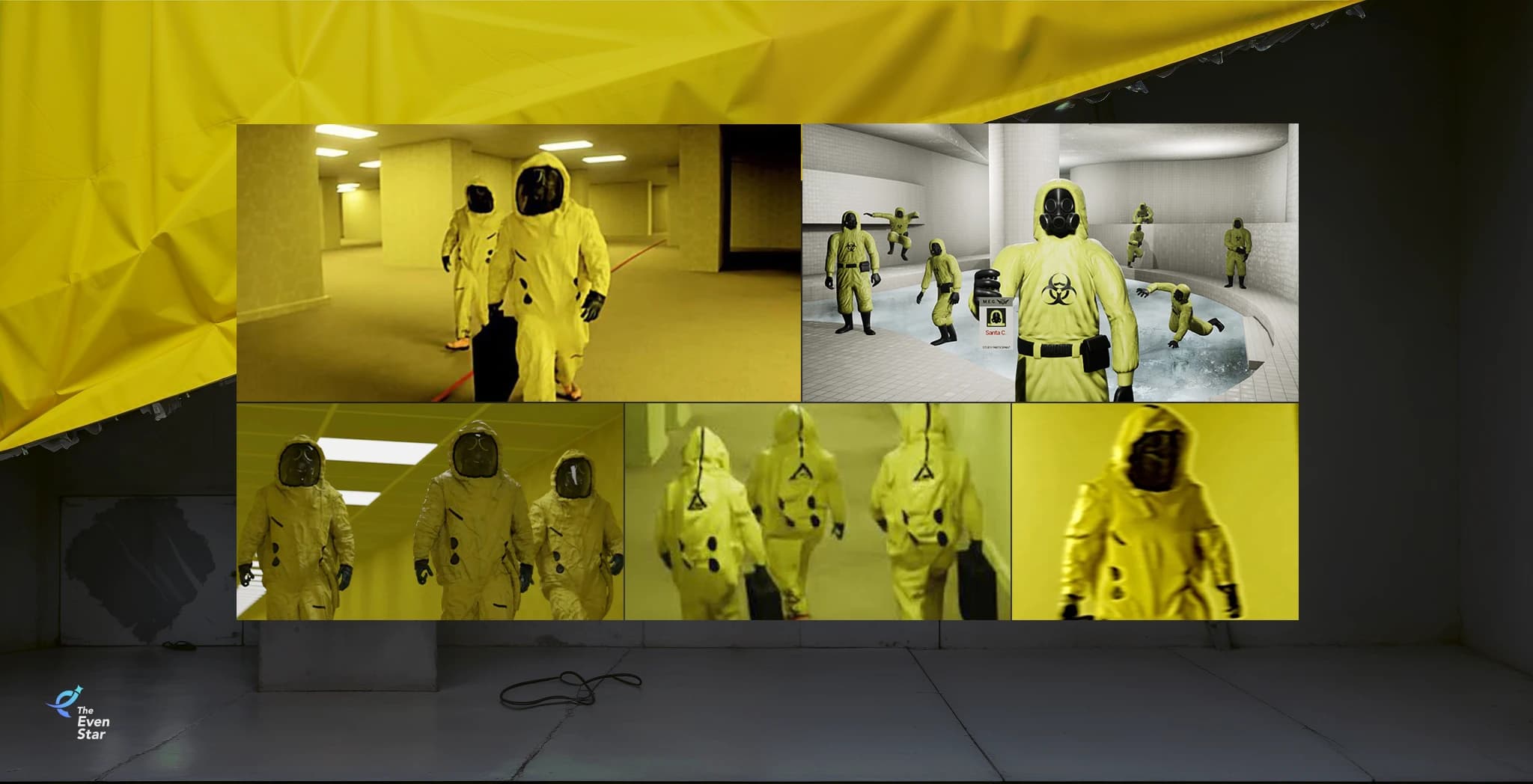
Complications also arose throughout AI-assisted experimentation stages. While Leonardo AI and Meshy AI allowed rapid preview generation and texture experimentation, generated outputs often lacked the surface consistency and geometric precision required for the final high-resolution model, requiring additional manual refinement during later production stages.
Industry Perspective
Modern 3D character production for Unreal Engine environments increasingly combines traditional modeling workflows with AI-assisted production tools. Integrating advanced AI models such as Leonardo AI and Meshy AI into production stages accelerates preview generation, concept experimentation, and texture development during early production iterations and reduces the blind guesswork.
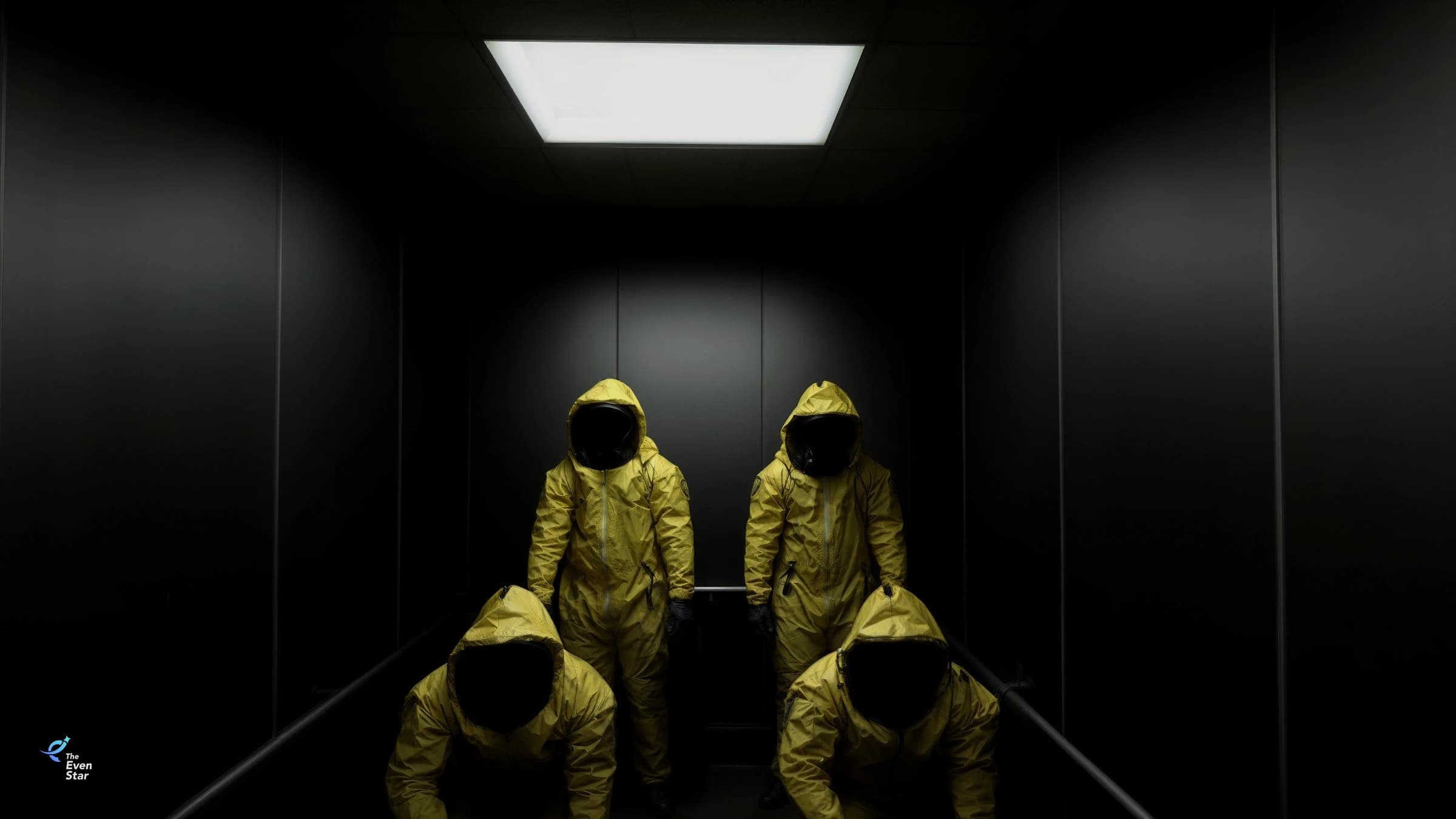
At the same time, the development of the HAZMAT character demonstrated that high-resolution AAA-oriented assets still require extensive manual refinement, cloth simulation, high-poly sculpting, and careful environment integration in order to achieve believable material response, detailed surface behavior, and consistent visual quality across the final model.
Modern Unreal Engine productions continuously push toward denser geometry, more cinematic environments, and higher visual fidelity. Consequently, success relies on seamlessly combining optimization, atmosphere-driven design, and high-resolution asset development within a single pipeline. Combined with systems such as UE Nanite, these evolving workflows create new possibilities for building realistic and game-ready 3D assets.
Projects such as the HAZMAT character also reflect an ongoing commitment to exploring emerging production technologies and expanding technical expertise. As tools such as UE Nanite, Leonardo AI, and Meshy AI continue reshaping modern development workflows, continuous experimentation remains an important part of identifying more efficient, visually compelling, and production-ready solutions for Unreal Engine projects.
More similar cases