 5 min read
Before any prototype existed, the client needed to do three things: talk to manufacturers, present to investors, and validate the product direction.All of that happened through 3D visualization alone.
The brief was a wireless RGB speaker lamp — portable, weather-resistant, designed to sit comfortably in any interior without demanding attention. My job was to take that idea from a description to a complete visual identity: resolved form, simulated materials, and a render package built for immediate commercial use — product pages, launch campaigns, and e-commerce listings across all sixteen lighting modes, with alpha transparency optimized for any background.
The work covered the full design process — from early form exploration in Autodesk Maya to a complete set of production-ready visuals rendered in V-Ray. Every decision along the way was guided by a simple question: does this feel like a product people would actually want to live with?
Design & Development
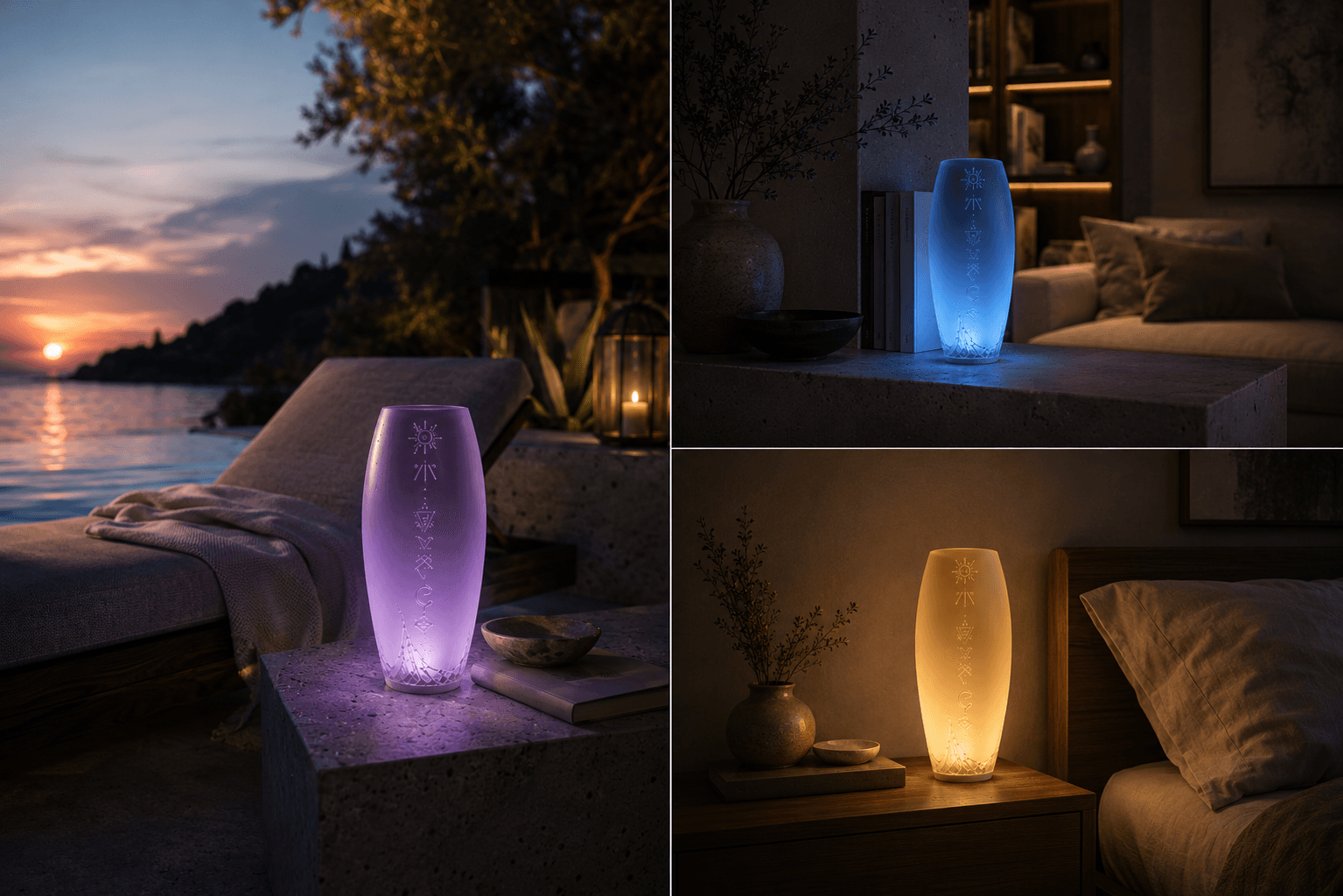
The shape needed to work across different environments — outdoors, indoors, or on a shelf. That meant finding a silhouette that doesn't impose itself on the space around it. One of the key challenges was balancing multiple product roles within a single enclosure. The lamp needed to function simultaneously as a portable speaker, an ambient lighting device, and a decorative object. The final design was developed to support all three functions without allowing any single feature to dominate the overall appearance. To reinforce the product's identity without relying on aggressive branding, subtle embossed symbols were integrated into the outer surface. These details become visible only under certain lighting conditions, adding visual interest while preserving the clean, minimal character of the overall design.
Multiple directions were modeled and tested before arriving at the final geometry — a profile that feels stable from every angle and supports RGB lighting without allowing it to dominate the overall design.
Before manufacturing conversations can begin, a product needs a clear visual identity. Its form, proportions, materials, and overall character must be defined well enough to communicate the concept and align stakeholders around a shared vision.
For startups especially, visualization often becomes the first tangible version of the product. It provides a foundation for investor presentations, manufacturer discussions, and early market validation long before physical production begins.
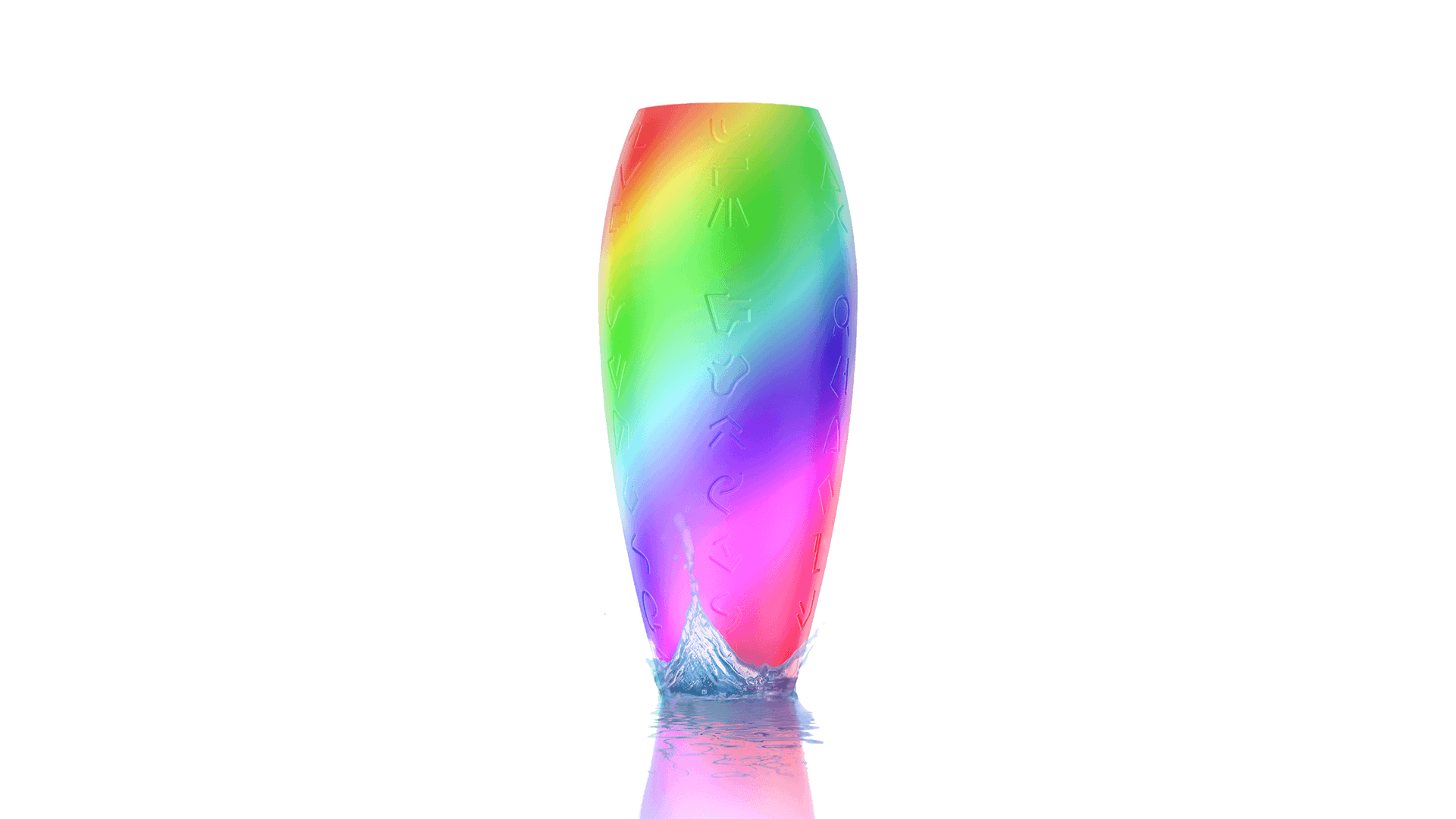
The model was built in Autodesk Maya through a NURBS-based surface workflow — moving from a draft base shape through several silhouette iterations until the form felt resolved. A NURBS-based approach was chosen for its ability to provide precise control over curvature and surface continuity, making it particularly well suited for consumer product design where clean reflections and refined forms are essential. Neutral enough to sit in any interior, yet distinctive enough to maintain a recognizable visual identity.
The material choice was the most consequential decision in the project. Frosted polycarbonate was selected specifically because it had to work across all sixteen RGB modes without any single colour overwhelming the form. A clear enclosure would have turned the lamp into a light source — too directional, too intense. A fully opaque shell would have buried the light entirely. Frosted polycarbonate sits in between: light enters the material, scatters internally, and emerges as a soft even gradient. The product looks the same at rest as it does lit — which was the point.
Beyond the product design itself, the visualization package was created to support commercial presentation. The final renders showcased the product's key selling points — ambient RGB lighting, portability, weather resistance, and decorative appeal — while providing marketing assets suitable for product pages, promotional materials, and launch campaigns.
Outcome
The client received a complete 3D design package — source files, multi-angle renders with alpha transparency optimized for marketing pipelines, and RGB colour variations across all sixteen modes.
Long before physical production began, the visualization assets supported investor presentations, manufacturer discussions, and commercial validation. By defining the product's form, material behaviour, and visual identity, the project established a clear reference point for both manufacturing discussions and future marketing efforts. The same render package later became the foundation for product listings, promotional materials, and launch campaigns.
This was the first step in a longer journey: from a concept that existed only as an idea to a physical product now available on the market.
Recent Posts